
The Wild, Wild West
Introduction
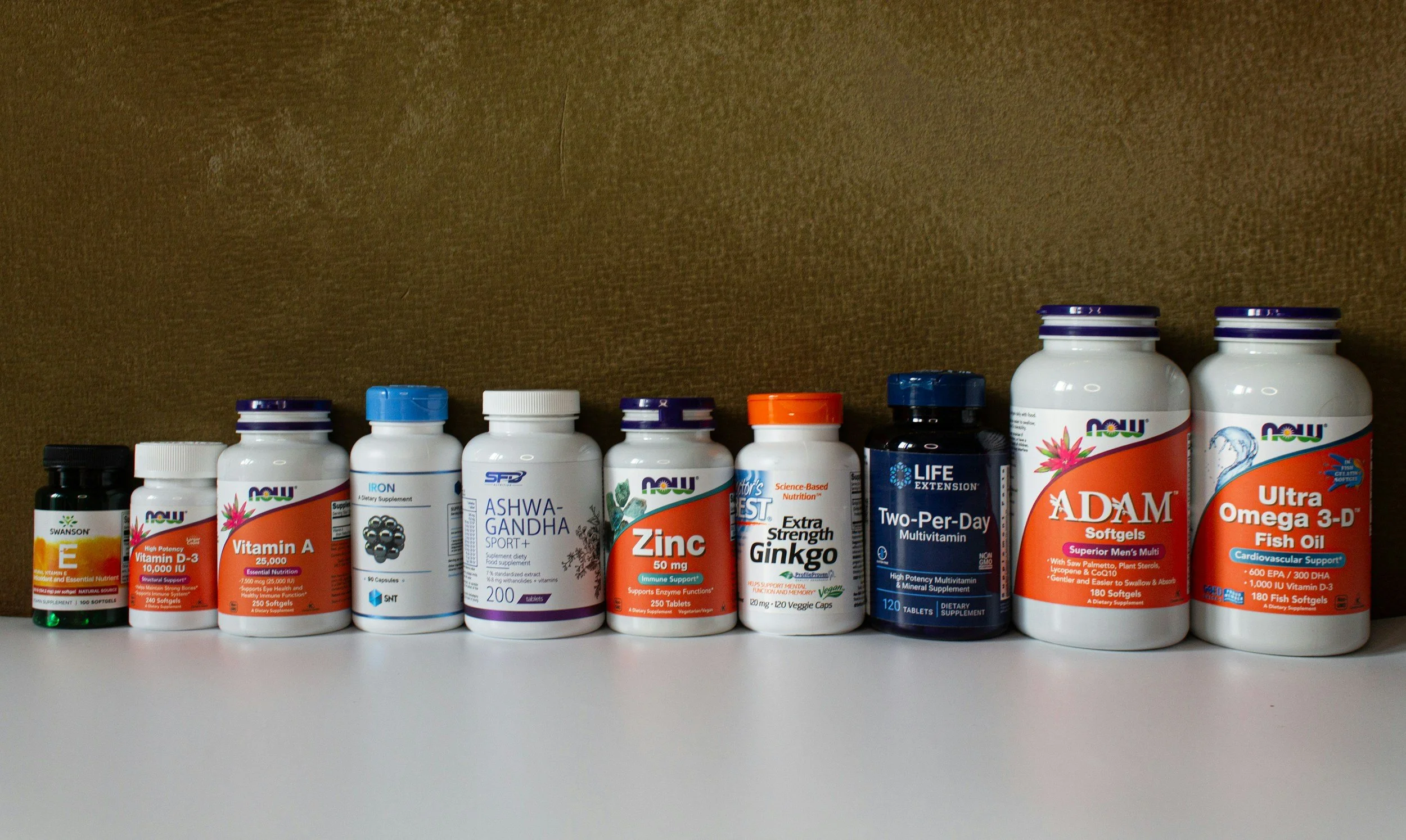
Americans spend more than $30 billion every year on dietary supplements.
Most consumers assume these products are:
Regulated
Tested for safety
Consistent in dose and purity
None of those assumptions are reliably true.
Dietary supplements are not regulated as drugs. Many behave like drugs. Some are drugs—undisclosed.
That gap between perception and reality has consequences.
What Is a “Supplement”?
According to the U.S. Food and Drug Administration (FDA), a dietary supplement is:
“A product taken by mouth that contains a ‘dietary ingredient’ intended to supplement the diet.”
Under U.S. law:
Supplements are regulated as foods, not drugs
Manufacturers do not need to prove safety or effectiveness before marketing
The FDA generally acts after harm is reported, not before
This regulatory framework creates a marketplace where products with drug-like effects can be sold without drug-level oversight.
Case Presentations
Case 1: Energy Drinks Without Guardrails
A 14-year-old girl died after consuming two large energy drinks within 24 hours.
Following litigation, the manufacturer was forced to classify the product as a beverage, which at least subjected it to minimal oversight.
The problem was not caffeine alone—it was dose ambiguity, marketing to youth, and lack of regulation.
Case 2: A Soldier, a Supplement, and a Death
In 2011, Michael Lee Sparling, a 22-year-old U.S. Army private, collapsed and died after running for approximately ten minutes during formation at Fort Bliss, Texas.
He had taken Jack3d, a popular pre-workout supplement, at the recommended dose.
Jack3d contained dimethylamylamine (DMAA), a potent synthetic stimulant.
New York Times:
Death After Using Jack3d Points Up Gap in RegulationNew York Times:
Workout Supplement Challenged After Death of Soldier - The New York Times
Jack3d was ultimately removed from the market—after multiple deaths.
The system reacted after, not before.
Case 3: The Deployed Soldier With Arrhythmia
A 24-year-old Army specialist deployed to Afghanistan presented with atrial fibrillation with rapid ventricular response, with heart rates in the 140–160s beats per minute.
He reported consuming multiple energy and pre-workout supplements interchangeably:
“We just throw them on the table and grab what we want.”
He admitted that similar episodes had occurred previously but had “waited them out.”
The U.S. military has since faced repeated morbidity and mortality linked to supplement use and maintains a dedicated safety resource:
Operation Supplement Safety (OPSS)
https://www.opss.org
Flying Under the Radar
The supplement industry produces one of the largest populations of patients flying under the radar.
Why?
Because supplements:
Are perceived as “natural”
Are marketed as safer alternatives to medications
Often divert patients away from proven therapies
Patients may believe they are reducing risk—when they are actually avoiding effective treatment.
This is not benign.
Common Examples in the Cardiometabolic Clinic
“Natural Blood Thinners” (Nattokinase)
There is no dietary supplement proven to reduce stroke risk in atrial fibrillation.
Approved anticoagulants—studied in randomized controlled trials (RCTs)—include:
Factor Xa inhibitors (e.g., apixaban, rivaroxaban)
Direct thrombin inhibitors (e.g., dabigatran)
Warfarin
These therapies accept a known bleeding risk in exchange for a demonstrated reduction in stroke.
A supplement claiming anticoagulation without bleeding risk is not medicine—it is fantasy.
For high-risk patients, this is Russian roulette.
Red Yeast Rice
Red yeast rice contains monacolin K, which is chemically identical to lovastatin, the first statin approved in 1987.
Problems include:
Unpredictable dosing
Unknown contaminants
No manufacturing oversight
If lipid lowering is indicated:
Use a regulated statin
At a known dose
With known safety and benefit
Red yeast rice provides none of these assurances.
Vitamin K2 and Coronary Artery Calcium
Vitamin K2 has not been shown to reduce coronary artery calcium (CAC).
Coronary calcium reflects plaque biology, not vitamin deficiency.
Statins may increase calcium density because they stabilize plaque, not because they worsen disease.
Confusing calcification with risk leads to therapeutic paralysis.
Fish Oil Supplements
There is no over-the-counter fish oil approved to reduce cardiovascular risk.
FDA-approved agents include:
Icosapent ethyl (EPA-only) — shown in RCTs to reduce major adverse cardiovascular events (MACE)
Mixed EPA/DHA formulations have not shown cardiovascular benefit
Supplements:
Are unregulated
Often oxidized
Contain variable fatty acids
“Cheaper” does not mean “equivalent.”
Hidden Drugs in Supplements — A 2025 Example
In late 2025, the FDA announced a recall of Silintan, a supplement marketed for joint and body pain.
FDA testing revealed undeclared meloxicam, a prescription nonsteroidal anti-inflammatory drug (NSAID).
Reported risks included:
Heart attack and stroke
Gastrointestinal bleeding and perforation
Acute kidney injury
Dangerous interactions with blood thinners and other NSAIDs
Cardiovascular Business:
“FDA announces supplement recall over risk of heart attack or stroke”
This was not the company’s first offense.
Hidden prescription drugs in supplements are not rare—they are recurrent.
Consumers are not consenting to medication. They are being deceived.
CardioAdvocate Checklist
No major cardiovascular society recommends supplements for cardiovascular risk reduction
When addressed in guidelines, supplements are typically Class III (no benefit or harm)
“9 out of 10 doctors recommend…” is often marketing sleight of hand
If you choose to take supplements:
Bring a list to your clinician
Understand they cannot safely endorse them
Absence of guidance is often liability-driven, not ignorance
If an insurer steers you from an FDA-approved drug to a supplement:
Be skeptical
That decision prioritizes cost, not health
Bottom Line
Supplements are not drugs—but many behave like them
“Natural” does not mean safe
Regulatory loopholes favor speed and profit over protection
Substituting supplements for proven therapies can be dangerous
Take supplements at your own risk.
Understand what risk you are taking.
Editor’s Note
This article addresses systemic regulatory failures—not isolated bad actors. The intent is education, not fear, so individuals can make informed decisions alongside qualified clinicians.
Content on CardioAdvocate.com is for educational purposes only and does not constitute medical advice. No physician–patient relationship is created. Always consult a qualified healthcare professional for medical concerns.
